
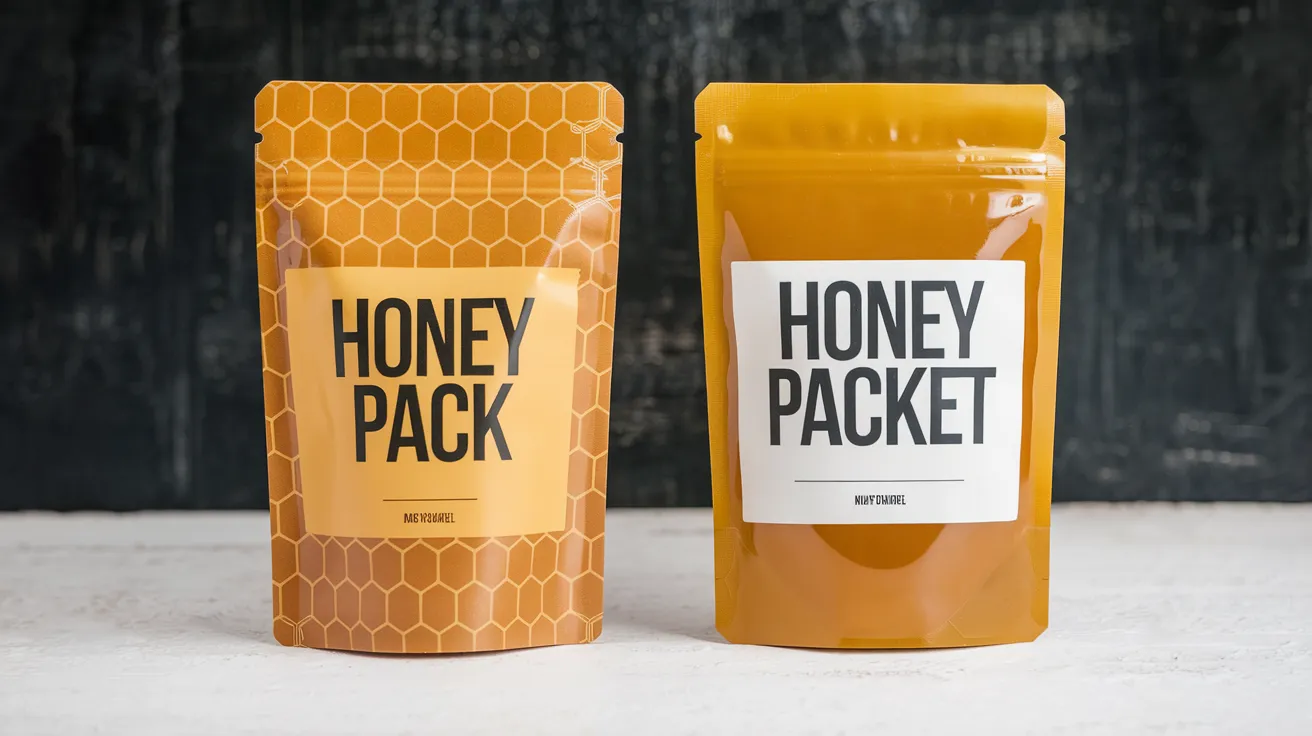
Honey Pack vs Honey Packet: What's the Difference?
The Confusion: Not All Honey Packets Are “Honey Packs”
Search for “honey pack” or “honey packet” online and you’ll end up with a confusing mess of results – some showing little packets you’d get with your tea at a restaurant, others showing gas station supplements with exotic names and bold claims. So what’s the actual difference?
Here’s the key: a honey packet is regular food honey in a convenient single-serve package. A honey pack is a supplement product marketed for sexual enhancement and energy. They’re completely different things that happen to have confusingly similar names.
This guide clears that up so you know exactly what you’re looking for.
Food Honey Packets
These are exactly what they sound like – small, single-serve portions of regular honey. You’ve probably seen or used them before.
You’ll find them at restaurants alongside tea or biscuits. Fast food chains include them for chicken nuggets or biscuits. Coffee shops stock them as an alternative to sugar. Athletes and hikers use them for portable snacks. Campers and travelers pack them as a convenient sweet food source.
Common brands include Sue Bee Honey packets, Nature Nate’s honey sticks, Simply Balanced organic honey packets, Great Value honey packets, and various restaurant generic brands.
People use them to sweeten beverages, add flavor to food, get quick energy from natural sugar, for cooking and baking, and some even use honey on minor wounds as first aid.
Where do you buy them? Grocery stores, restaurants (often free with orders), convenience stores, online retailers like Amazon and Walmart, and bulk suppliers for businesses.
Price-wise, you’re looking at $0.10-0.50 per packet – much cheaper than supplement “honey packs.”
Safety? Generally recognized as safe by the FDA. It’s just honey. No herbal supplements, no drugs, no controversy. Just watch out with raw honey and infants under 12 months due to botulism risk.
Supplement “Honey Packs”
Now we’re talking about something completely different. “Honey packs” in the supplement context are small sachets containing honey mixed with herbal ingredients and marketed for sexual enhancement, energy, and vitality. These are NOT food products – they’re unregulated dietary supplements.
You’ll see them marketed under names like Royal Honey, Black Thai Honey, VIP Honey, Kingdom Honey, and various “enhancement honey” products.
The labels claim they contain pure honey as a base, plus royal jelly, bee pollen, tongkat ali, panax ginseng, maca root, and various other herbs and amino acids. But here’s the critical issue: many contain undeclared pharmaceutical drugs like sildenafil (Viagra) or tadalafil (Cialis).
What are they marketed for? Sexual enhancement, increased libido, improved stamina, energy boost, and male/female vitality. Important note: these are marketing claims, not FDA-approved medical uses.
Where do you find them? Gas stations, smoke shops, adult stores, online retailers of varying legitimacy, and some convenience stores. Use our Honey Pack Finder to locate sellers in your area.
Pricing runs $5-15 per packet, sometimes more for “premium” brands.
Safety concerns? Major red flags all around. FDA warnings for undeclared drug ingredients, recalls for contamination, reports of adverse health effects, dangerous drug interactions, inconsistent dosing, and counterfeit products everywhere.
See our Honey Pack Safety Guide for details.
Key Differences at a Glance
Food honey packets are for sweetening food and beverages. They contain just honey. They’re regulated under FDA food standards and generally safe. Price runs $0.10-0.50. You buy them at grocery stores and restaurants. They’re fully legal.
Supplement honey packs are marketed for sexual enhancement and energy. They contain honey plus herbs (and often hidden drugs). They’re unregulated supplements with significant safety concerns. Price runs $5-15+. You buy them at gas stations and smoke shops. Legality is questionable when they contain undeclared drugs.
Why the Confusion Exists
Several factors contribute to this naming overlap.
The packaging is similar – both come in small, single-serve packets, which leads to visual confusion in search results and store displays.
SEO overlap means people searching for food honey in packets and people searching for supplement honey packs often use similar search terms, causing both to appear in results.
Some supplement honey pack sellers intentionally use ambiguous language to appear like harmless food products, avoiding regulatory scrutiny. That’s deceptive marketing at work.
Different countries may use “honey pack” or “honey packet” to mean different things, adding to the confusion.
What Are You Actually Looking For?
You want food honey packets if you need honey to sweeten tea or coffee, you’re looking for portable snacks, you want pure honey with no additives, you’re shopping at a grocery store, you need it for cooking or baking, or the price is under $1 per packet. Where to go: grocery stores, Amazon, Walmart.
You want supplement honey packs if you’re researching sexual enhancement supplements, you’ve heard about “Royal Honey” or similar products, you’re seeing them at gas stations or smoke shops, the price is $5+ per packet, or marketing mentions energy or vitality. Where to go: read our complete guide to honey packs first to understand risks, then use our finder tool if you choose to purchase.
Common Search Intent Mix-Ups
“Honey packets for tea” – you probably want food honey packets, not supplement honey packs (unless you have a very unusual tea preference).
“Honey packs near me” could mean either, but context matters. Grocery store search likely means food honey. Gas station search likely means supplement honey packs.
“Royal honey packets” – almost certainly supplement honey packs. “Royal” is a common marketing term for enhancement supplements.
“Honey packet calories” – you probably want food honey nutritional info. Supplement honey packs rarely have accurate nutritional labeling anyway.
For Parents and Guardians
If you’re buying honey for children, make absolutely sure you’re getting food honey packets, not supplement honey packs.
Red flags that it’s a supplement: sold at gas stations or smoke shops, mentions energy, vitality, or enhancement, price over $3-4 per packet, packaging with aggressive marketing, and claims about male/female performance.
Food honey packets are clearly labeled, sold in grocery stores, and marketed as food products.
The Bottom Line
Honey packet (food) equals safe, simple, sweet. Just honey.
Honey pack (supplement) equals complex, controversial, risky. Honey plus herbs plus possible undeclared drugs.
If you were looking for food honey and ended up learning about supplement honey packs – now you know the difference. If you were researching supplement honey packs and saw results for food honey – same deal.
Always be clear about what you’re purchasing, where you’re purchasing it, and what you intend to use it for.
Learn More
If you want food honey, check your local grocery store’s honey aisle, search Amazon for “honey packets” or “honey sticks,” and look for familiar food brands.
If you’re researching supplement honey packs, start with What is a Honey Pack? for a complete overview, Do Honey Packs Work? for evidence-based analysis, Honey Pack Safety Guide for critical safety info, and Where to Buy Honey Packs for purchasing guidance.
Use our Honey Pack Finder to locate verified sellers, and visit our Safety Hub for harm reduction resources.
This article is for educational purposes only. Food products and supplements serve different purposes and have different safety profiles. Always know what you’re purchasing and consuming.